


is a journalist and editorial advisor at Philonomist. She was previously the chief editor of Le Monde des Débats (1999-2001), Courrier International (2001-2005) and Le Monde (2005-2008), before joining the financial newspaper La Tribune as deputy managing editor. She won a national journalism award for her coverage of the financial crisis, which she also wrote about in her book Capital Sin. The Story of the Financial Crisis (2009).
Picture: © Elie Axas

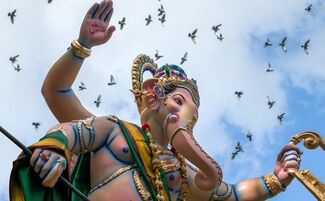
A law being passed in the state home to Silicon Valley aims to prohibit any discrimination based on caste. Some groups say Hindus are exemplary Americans and that they’re being singled out unfairly. On closer look, the case reveals a deep philosophical and cosmological divide, and challenges a certain understanding of diversity.
The scene is fictitious, but unfortunately plausible. In a large Silicon Valley company, two engineers of Indian origin are working on a project; their colleague invites them to have lunch together but one of them refuses: since he’s a Brahman – a high caste – he cannot share a meal with the other, who is from a low caste or (which is even worse in his eyes) a Dalit, i.e. untouchable. The western colleague will probably not understand the reason for this refusal; nor could they even imagine that the categories of pure and impure in the oldest of the great religions, Hinduism, might have an impact in tech, the most modern sector of the global economy.
However, such cases must be sufficiently numerous and of concern for the California Senate to decide to vote, on 11 May 2023, and by an overwhelming majority, for the prohibition of discrimination based on caste. If SB 403 goes through, California will become the first US state to protect its citizens who are victims of the religion-based hierarchical system that characterises the Indian civilisation. The move isn’t out of the blue: in 2020, the State of California sued Cisco System, a tech giant, following a claim of caste discrimination; and in March 2023, the city of Seattle was the first to pass a similar law.
An “exemplary” diaspora
You might think that the caste system is an ancestral particularism, and a Hindu affair. Castes have been banned in India since 1950 and positive discrimination mechanisms have been set up in favour of low castes and untouchables (those outside the caste system). So why should this California case interest us? The first reason is that the Indian diaspora is large in the West, not only in the United States (4.5 million people, including Vice President Kamala Harris) and the United Kingdom (1.8 million, including the Prime Minister Rishi Sunak), but also in France (nearly 500,000, including 300,000 on the island of La Réunion).
This diaspora also wants to be exemplary. In a protest sent to President George W. Bush after the September 11 attacks to complain that official prayers had been limited to monotheistic religions, representatives of Indian-Americans wrote: “Hindus are part of the nation. We are hardworking people who contribute to the American society, economy, education, and quality of life far beyond our numbers.” They go on to cite the non-violence, pluralism, tolerance, family values, and academic and professional success that make American Hindus “ideal citizens”. Americans from India have therefore
…Subscribe to Philonomist and gain free access to all our content and archives for 7 days. You'll also receive our weekly newsletter. No commitment. No bank details required.
You're already subscribed to Philonomist via your employer?
Connect to your account by filling in the following details (please provide your professional email address).
