


is a sociologist, head of research at the CNRS, member of the “Centre Internet et Société” think tank, teacher at Sciences Po Paris, and former visiting scholar at Northwestern University and Stanford. His works focus on culture and the digital world.
Picture © Hermance Triay
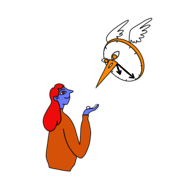

In his recent book Tech: When Silicon Valley Reshapes the World (in French, 2023), sociologist Olivier Alexandre shares the fruits of his long, unprecedented immersion in the heaven of new technologies. In it, he follows the frantic pace of the humans behind the tech, from their breakthrough innovations to their daily life in the heart of Silicon Valley, to try to understand the spirit of the place. He speaks to us about his journey.
Interview by Nicolas Gastineau.
How would you describe all these people you met, who live and work in Silicon Valley?
Olivier Alexandre: Silicon Valley is a difficult crowd to grasp, because it’s heterogeneous and constantly evolving. It’s a growing population, with a high rate of immigration, an important division of labour, and a great diversity of professions – but with a unity around what they call a “mentality” or a “culture”. I tried to take seriously the way they always defined themselves, namely as “makers” and “builders”.
To understand what this involves, we must start from the break from politics introduced by these technologists. The institutional structure of politics doesn’t interest them. Their approach, which seems to them much more democratic, consists in transforming the world by “doing”, by finding solutions, and through technological development. As a result, Silicon Valley is constantly projecting itself in time, anticipating future innovations on a global scale.
‘In Silicon Valley, everything tends towards a maximal efficiency of the organisation of time’
And this relationship to time seems to have become the Valley’s mode of organisation, which you describe as a “fast space”. What’s that about?
We need to distinguish between several levels and the way they interweave. At the lowest level, we see a series of conventions of everyday life: appointments must be quick, just like phone calls and pitches of entrepreneurial projects. The solutions that Silicon Valley produces – and which they’re the first to consume – fuel the same dynamic. Microblogging, emails, AI solutions, automation, interfaces, customer relations: everything tends towards a maximal efficiency in the organisation of time.
At the intermediate level, the way deals play out between entrepreneurs and investors is crucial. I use the masculine plural [in French, translator’s note] because they’re mostly men. You have to convince people very quickly, because there are many proposals in the same area and one of the challenges is to engage very early with the right people. After 18 months, investors expect numbers to double (of users, of production capacity, etc). This is Moore’s Law, which isn’t so much a law as a self-fulfilling prophecy.
Then, on a time scale of four to eight years (eight years being the maximum investment cycle for venture capital funds), investors expect companies in their portfolio to go public, which will make their gamble pay off. Such is the conception and the time frame of success in Silicon Valley – successes which, let us not forget, remain very rare.
We often hear that Silicon Valley executives don’t let their own children grow up with too many screens, and that they’re paradoxically more concerned than us about the consequences of their inventions…
One of the historical demands of workers in Silicon Valley is that the authorities allow private schools to determine their own curriculum. In these schools, sometimes backed directly by companies, there are few screens and the learning is focused on “doing” in the sense of arts and crafts: knitting, cooking, manual work in general. Entrepreneurs and tech workers are very knowledgeable and keenly interested in cognitive science and brain development. They’re aware of the negative impact of excessive exposure to screens at an early age. This is why they favour outdoor activities, crafts, or learning-by-doing for their children. Another example is the Esalen Institute, where entrepreneurs and investors can go to disconnect, in something of a screen-free bubble. The Burning Man festival, a kind of disconnected carnival where the whole Valley meets in summer, also serves this purpose. But this fundamental ambiguity, the fact that information and communication can be liberating but also create new forms of alienation, isn’t collectively problematised, beyond education strategies.
But how do they reconcile their knowledge of these risks and their constant drive to spread their technologies throughout the world?
Silicon Valley has developed at a fair distance from the industrial and technological cataclysms of the 21st century. The statue of the Tech Crunch Awards, a kind of Nobel prize for tech, is a Homo sapiens holding a bone. The idea is that humanity is defined by its ability to produce tools a
…Subscribe to Philonomist and gain free access to all our content and archives for 7 days. You'll also receive our weekly newsletter. No commitment. No bank details required.
You're already subscribed to Philonomist via your employer?
Connect to your account by filling in the following details (please provide your professional email address).
