

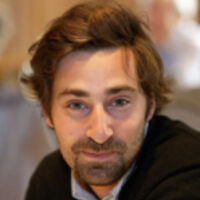
is a doctor in management sciences and lecturer at AgroParisTech, where he co-directs the chair of Environmental Accounting. He also co-directs the “Human Companies: Ecology and Accounting Philosophies” research program at the Collège des Bernardins.
Picture © Author’s personal collection
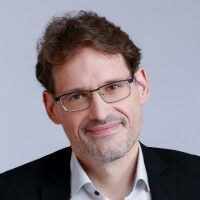
is a doctor in mathematics and management sciences and lecturer at AgroParisTech, where he co-directs the chair of Environmental Accounting. He also co-directs the “Human Companies: Ecology and Accounting Philosophies” research program at the Collège des Bernardins.
Picture © www.linkedin.com/in/alexandre-rambaud

What do environmental NGOs, local councils, big food companies, and citizen collectives all have in common ? They are all held accountable. Any organisation, private or public, lucrative or not, small or large, has to take stock: so why not rely on this common language to create a new space for experimentation and dialogue? Here, Clément Feger and Alexandre Rambaud outline some practical ideas for an approach to accounting which would be well and truly green.
➤ Find the first part of the interview: “Accounting, a philosophical object?”
Interview with Apolline Guillot.
Do we already have a unified set of accounting standards, globally?
Alexandre Rambaud: There are some, but only listed companies must follow these international accounting standards. These were built within the International Financial Reporting Standards Foundation, a private law organisation based in an American tax haven, in Delaware. In 2002, the EU delegated its accounting standardisation for listed companies to this foundation, and many international companies and investors currently base themselves on the IFRS, without these standards being truly international. By accepting a loss of accounting sovereignty over large companies, the EU has deprived itself of the ability to intervene on standards, in order to modify them, if it wished to do so.
Clément Feger: Let’s not forget that the accounting standard is a convention, which is in no way objective or scientific. The philosopher Cornelius Castoriadis said that the legitimacy of a norm is the possibility of adopting it. From the moment we consider that a standard can no longer be adopted, it is no longer legitimate. However, today, it is imperative to re-examine it, to reposition it in relation to the new issues, especially environmental ones, that are arising.
Hence your work on so-called “green” accounting at the Collège des Bernardins, and in particular, Alexandre Rambaud, through the development of “Comprehensive Accounting in Respect of Ecology” or CARE... Does this model mark a break from traditional accounting?
A. R.: The CARE model is inspired by traditional accounting, in that it involves returning to the original meaning of “capital”. This word has existed since Antiquity and simply refers to a debt. For a long time, it was not an economic term but a legal one, which simply meant that you had to repay the money lent to you. Even today, business accounting continues to use the notion of capital in this historical sense. Another meaning appeared through a semantic shift in the Renaissance: capital became a set of assets, productive resources to be made profitable – which favours shareholders and owners at the expense of other stakeholders. This is the understanding used by the economy and financialised accounting today.
‘We’re only aligning accounting standards with environmental sciences’
—Alexandre Rambaud
The CARE model takes the initial idea of “capital” as debt, and then broadens it to non-financial issues. It literally defines capital as an entity (material or not, human or not) which is deemed capital, that is to say, a source of concern. We propose to include an obligation to preserve these “capital entities” used by organisations. In the CARE model, organisations can only calculate their profit and performance once their debt in terms of natural and human capital is “repaid”. This doesn’t contravene historically existing accounting standards – it just requires entering environmental liabilities into the balance sheet. In fact, we’re only aligning accounting standards with environmental sciences, adapting to the reality of an organisation’s imperatives.
Do you have an example of something traditionally considered a “resource” but which, in the CARE model, would instead be considered a “capital entity” which must be preserved?
A. R.: According to CARE, the land, when it is put into exploitation, must be considered as a debt, because we borrow from an “environmental commons” which isn’t predestined only for human use. But through its particular uses, it’s integrated into the company’s activity: what is recognised as an asset is the use made of the ground. You need soil that is sufficiently solid to provide support for the passage of machines and people, which allows exploitation. If the soil was completely loose, it would be impossible to grow what we have today.
When an organisation wishes to move to the CARE model, first, it’s established that it’s the “use of the land”, and not the land itself, which is an asset. Second, we must measure the impact on the soil of the uses we make of it. Driving a machine over soil is a necessary condition for producing wheat, but at the same time, it destroys it. So we will then ask ourselves how we can return the soil to its initial state, in a “good environmental state” – which we will have determined beforehand with all the actors involved in the life of this ecosystem. Finally, we will quantify the necessary expenses for prevention or environmental restoration of the soil, which are integrated into the management of the company’s overall activity.
CARE is therefore based on two levels of accounting: biophysical accounting, which tracks land consumption due to its usages, and an accounting which connects these usages with the necessary preservation expenses, which impact the company’s results.
‘Profit can only be calculated after the reimbursement of the providers of capital, including natural ones’
—Clément Feger
C. F.: This profoundly changes what we call profit, which can only be calculated after the reimbursement of the providers of capital, including the providers of natural capital... that is to say, the land. As soil contributes to the creation of economic value through the jobs (usage) that it makes possible, preservation costs must be deducted from value creation.
And in practice, how would that work?
A. R.: When we arrive in a company, we work with it to define the extra-financial capital and their level of preservation on scientific bases. This is the step that requires the most attention, because it gives us all the “capital entities” which need to be preserved. Then, we insert them into the organisational model of the company and we structure the preservation and avoidance actions – even if it means changing the business model, if necessary. Then, we can take into account the value chain and financial investments, assess the preservation costs, and integrate these costs into the accounts. We can then establish the balance sheet, the financial income statement, and the annex according to CARE, and analyse the performance of the organisation by combining biophysical accounting and the final integrated accounting, connected to the financial accounting of the organisation.
‘We must begin a dialogue with actors who only have the ecosystem they share in common’
—Clément Feger
C. F.: The concern is that neither accounting limited to company perimeters, nor public and national accounting have been designed to jointly manage natural environments. When we define the key entities to be preserved, we must therefore begin a dialogue with actors who only have the ecosystem they share in common.
And this dialogue, Clément Feger, is the basis of what you call “ecosystem-centered accounting”?
C. F.: Currently, balance sheets report on the activity of a private, public, or civil organisation with legal personality. In the case of the preservation of an ecosystem, we need to be able to establish a space for dialogue and negotiation so that all the organisations dependent on this ecosystem can establish collective, coordinated governance. They need to agree on the definition of the natural entities to be preserved, on the level of the environmental status to be maintained or achieved, or on the effectiveness of the contributions made... And to give actors the means to organise themselves despite the heterogeneity of contexts and situations across the land, we must rethink the basis on which they communicate.
‘This work could contribute to developing mechanisms adapted to the collective governance of ecosystems’
—Clément Feger
Could we not just create a legal entity for the ecosystem?
C. F.: Indeed, that could be a solution, to create a legal entity for a forest or a river which must be protected. But we can also think of various forms of governance at the scale of each ecosystem, which integrate associations, representatives of the state, private companies, and residents who inhabit this river or that forest, use it, and have an impact on it. It’s about changing the scope of action and accountability: rather than adding the interests of different organisations, we need to think directly at the level of the ecosystem and environmental concerns.
In any case, we must ask ourselves these questions of collective organisation. Today, many well-intentioned people are trying to put in place forms of quantification and measurement of biodiversity or environmental impact. They don’t necessarily make the connection between the production of data and the question of the organisational and accounting architecture necessary to make the management of environmental issues operational. However, we will need accounting foundations centred around these shared concerns, which are increasingly sources of conflict, both to discuss each person’s responsibilities, to negotiate and monitor our commitments, and to reclassify our relationships and our activities. Ultimately, this work could contribute to developing and establishing legal mechanisms adapted to the problems of collective governance of ecosystems.
‘Extra-financial accounting standardisation is the subject of a real international race’
—Alexandre Rambaud
Are we not already imposing extra-financial criteria on accounting?
A. R.: “Extra-financial” accounting standardisation is the subject of a real international race between the EU and an English-speaking private law consortium, the International Sustainability Standards Board (ISSB). But any desire to integrate nature or society based on the principle that they’re capital in the economic sense of the term – that is to say, productive – remains a disaster. Behind it, we find the same old idea that we can control ecosystems with a few indicators, without giving up on the idea of productivity! But today we can show through economic modelling that this simply won’t be enough: it leads to a systematic impoverishment of ecosystems.
C. F.: Many players involved in so-called “sustainable” finance and accounting only address this issue in an instrumental manner, to make socio-environmental issues new sources of enrichment or financial risk management.
Can we change an accounting system by adding accounts successively, by adapting it?
C. F.: There is always a co-evolution between methods, techniques, and practices on the one hand, and concepts and world views on the other. Either we take the environmental question seriously, start from the issue of preserving ecosystems, and ask ourselves how we can redirect our economic system, our organizations, our modes of production, and our accounting to respond to it. Or we consider that the environmental limits and growing crises are just a calculation error and that we will be able to marginally readjust our existing methods and practices to integrate the “environmental question”. This last option is the easy solution, but it will leave us helpless in the face of future challenges.
A. R.: Basically, what we’re proposing is much more concrete than what the proponents of mainstream “green finance” propose. We keep in mind that organisations aren’t just floating dots in our economic system, but constitute the very foundation of the entire economy. So there is a need to give organisations a practical horizon, and to set milestones to get there. The CARE model has eight phases: you don’t have to go straight to the eighth phase, you can stop at any given phase and take a break. But at least we know that there are still steps to take, we know where we’re going.
Picture © Estudio Bloom / Unsplash
