


has a master’s degree in contemporary philosophy from the University of Paris 1 Panthéon-Sorbonne. He writes for Philonomist.
Photo © Mariette Thom
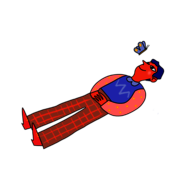
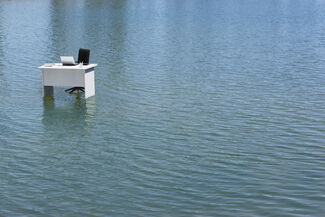
“But where did it go?” Look no further: your workstation has likely wound up next to those of your colleagues, in a shared space surrounded by glass windows. A similar fate awaits all our desks, as they get moved around and rearranged, between armchairs and sound-insulated booths… If you feel lost, don’t panic: we’ve taken an in-depth look into the hows and whys of this unprecedented workplace disruption.
You can’t work without an office… Or can you? What if we just jumped out of bed and sat down at our living room table? One survey by the Paris Region Institute reveals that 43% of the population in the French capital region already work remotely for 2.6 days a week on average. And although the phenomenon is marked by disparities and inequalities of access, the trend now seems irreversible. But until the 2000s, remote work was rare, and it remained marginal until the Covid period.
Offices are changing, but that’s nothing new. In his work Ethnology of the Office, the sociologist Pascal Dibie underlines its historical dimension, because no, we weren’t always Homo Sedens – or sitting beings at work. That happened gradually, as did workers’ move away from their homes and into workshops and administrative buildings. And although office life is currently taking a hit, it’s far from becoming a thing of the past: at the rate of seven hours a day spread over 223 days on average, Dibie explains that we still spend 1338 hours in the office per year. Even when it loses a few hours to remote work, the office remains a central part of our work life. This shows in the way we define remote work in relation to in-person work, rather than the other way around.
‘An office must breathe life’
—Vincent Dubois, Associate CEO of Archimage
Vincent Dubois is Associate CEO of Archimage, an architecture agency specialising in office layouts (including those of L’Oréal and Air France). He says we must start from this dynamic nature of offices to propose another model. “Faced with the temptation of a dying office, we need to bring it to life,” he says. And how? “The office must be animated in the initial sense of the word anima, that is to say, of the soul: an office must breathe life.”
The great exodus
But this breath could prove difficult to find: “If there’s only a 40% attendance rate at an office, that leaves 60% of it empty,” Dubois explains. The challenge is therefore to bring employees back when they don’t want to lose the freedom to work remotely, which “was granted without [employers] asking for anything in exchange.” And “we know that in France, it’s very difficult to take back what has been acquired.” The problem is that the “cost of emptiness” is exorbitant for companies. First, “there’s the financial cost”: rent, one of the main expenses for companies in the service sector, becomes a burden when a significant part of the office space is unused. On the scale of the Paris region, according to the Paris Region Institute, nearly 4.4 million square metres were deserted by workers in mid-2022. That’s the equivalent of about 650 football fields, left fallow.
‘Remote work can lead to a vicious circle, or a vacuum effect, whereby the emptier the office becomes, the fewer people want to work there’
But more than the economic cost of unused desks, the void also results in a “psychological cost”. Knowing that employees mainly go to the office for social interaction and to nurture their bond with coworkers, finding themselves alone at work can be a depressing experience. So much so that remote work can lead to a vicious circle, or a vacuum effect, whereby the emptier the office becomes, the fewer people want to work there. The challenge for the company is therefore to make the office desirable again, to bring employees back. And for Vincent Dubois, fighting the vicious circle of emptiness requires a change of layout, to make it livelier. “Through cultural animation, plants, colours, a series of things that are in motion, we must try to bring people back to the office for pleasure. To do this, we’re looking at the things they don’t have at home: conviviality, connection... This is why the presence of employees shouldn’t be too fragmented when they do come to the office. It’s about finding a balance.”
As the sociologist of work Dominique Méda asserts in an interview published in a 2023 book titled From a Distance: the Remote Work Revolution (published by the Paris Region Institute in 2023, in French), remote work untethers the “employee bond”. “Employees are gradually becoming service providers, subcontractors, auto-entrepreneurs,” she explains. Making the office more lively can alleviate this trend and help rehabilitate the space. But can it replace the vicious circle of emptiness with a virtuous circle of conviviality?
A nomad land
Cornered, the office has to reinvent itself. The “flexible office” is, according to Vincent Dubois, “a way to fight the vacuum effect”. Th
…Subscribe to Philonomist and gain free access to all our content and archives for 7 days. You'll also receive our weekly newsletter. No commitment. No bank details required.
You're already subscribed to Philonomist via your employer?
Connect to your account by filling in the following details (please provide your professional email address).
