


PhD, is an essayist, lecturer and Philosophie Magazine's chief editor. He’s a specialist in the fields of phenomenology and Russian thought, on which he has written two books: Dostoevsky. The Novel of the body (French ed., 2013) and Inside the mind of Vladimir Putin (Hurst, 2018).
Picture: © Serge Picard

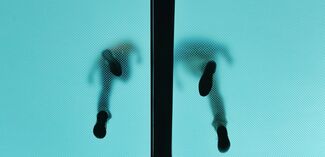
The open space is undergoing a revolution. Out with personal desks, photos and plants. In with hot desking, where you work somewhere different every time you’re in the office. Is it possible to live and work without being tethered to a place? Michel Eltchaninoff answers the question.
In the old days, Léa could start her day on auto-pilot – until she had coffee. She headed to her desk without thinking, making a beeline for the middle of the open space, on the left, near the window, opposite her favourite colleague. A quick glance at the photo of her kids, in pride of place next to her vintage mug of Queenie and her heap of junk, answering their smiles with a wink. But for the last two months, she has needed her wits about her as soon as she walks until the building. First, find a free desk. Not an easy task. Léa sighs. It’s barely 9am and there are already piles of files, occupying the territory like a towel on a sunbed. Everyone wants to be near the boss. The worst thing is that the desks near the natural daylight are all taken too. Piqued, she plonks her stuff down any-old-where, hoping she won’t get landed with Jean-Pierre with the loud voice. Or, heaven forbid, with Agnès. She needn’t have worried. Two weeks in, and everyone’s back to sitting in the same place every day.
Hot desking, like most new fads, is not to everyone’s taste. According to a post-Covid survey, only 16% of companies have adopted the system. But 55% are considering it. The main reason being cost-cutting. Why pay for so much office space when staff are working from home at least some of the time? But for the moment only one in three employees is satisfied. There are other advantages though, beside saving money. A big game of musical chairs is a great way to break routines, prevent clans that exclude newbies, and encourage people to talk to someone they don’t know. Managers try to convince employees of the virtues of hot-desking despite their reticence. Change always meets with resistance, especially when an office move is involved, which can be quite traumatic.
So let’s sit back and take a good look at what’s going on here. What is this new form of nomadism? Is uprooting people as dramatic as it sounds?
‘Hot desking is part of a change in civilisation: nobody has a permanent place in the universe any more’
Know your place!
Hot desking is a part of a change in civilisation that began several centuries ago. Since then, nobody has had a permanent place in the universe. In Ancient Greece, people lived in
…Subscribe to Philonomist and gain free access to all our content and archives for 7 days. You'll also receive our weekly newsletter. No commitment. No bank details required.
You're already subscribed to Philonomist via your employer?
Connect to your account by filling in the following details (please provide your professional email address).
