

After obtaining a master's degree in political philosophy and graduating from France's CFPJ journalism school, Cédric Enjalbert took charge of Philosophie magazine's website and culture section.
Picture: © Nikolaï Saoulski
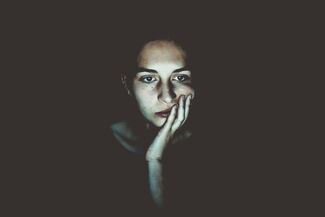
With its constant calls to consume and produce more, capitalism has been accused by some of robbing us of our sleep – while others say the claim is exaggerated. So are we really seeing a global epidemic of tiredness? And should we be fighting to reclaim our nights?
I woke up in on the wrong side of the bed the other day, before gravitating towards the coffee machine at work like an automaton on pilot mode. I was thinking about the article I had to write and the quality of my own sleep. I was tired. How did the night go? Had I been tossing and turning again? A colleague handed me his phone – he has an app which, once connected to an electronic headband, records his blood pressure, breathing patterns, and brain activity. “Dreem”, it's called. It doesn't just collect data; it also acts on the quality of sleep by relaying sounds via bone conduction, in order to stimulate the brain. One of its creators, Frenchman Hugo Mercier says they want “to resolve one of the biggest health problems following a hybrid strategy, both medical and accessible to the general public.” This year he released a book on the subject, titled À la conquête du sommeil (“The Conquest of sleep”, untranslated). “Our aim is to become the go-to solution to global sleep issues”, he writes, reminding us that bad sleep isn't just a medical and social problem; it's also “a magnificent playground for a business project!”. The extent of the problem (and size of the market) definitely seems to be growing: two thirds of adults in developed nations are not getting the recommended 8 hours of sleep a night, according to the World Health Organisation, prompting them to declare a global “sleep loss epidemic”.
You snooze, you lose
The causes are well known: inconvenient work hours, increase in the number of night jobs, too much screen time, and of course, noise and light pollution in big cities. One French geographer recently wrote that a “fog of artificial light has descended on our towns, covering us with a greyish veil and concealing the sight of the starry sky” (in Sauver la nuit; “Saving the night”, untranslated), in reference to the 11 millions street lights that now come on every night, following an 89 percent increase over the last two decades. Samuel Challéat goes on to explain that the function of cities changed at the turn of the 20th century, namely with the development of urbanism. “Following the 1933 International Congress of Modern Architecture, the Athens Charter – or Town Planning Chart – formalised the idea of the “functional city”. For this, it outlined four main “urban functions” – four fields of activity which were supposed to find their expression in distinct areas within the city: accomodation, work, trafic, leisure.” Street lighting started to spread on the back of technological innovation. Night time became not an interloping space conducive to rest and dreaming, but a potential source of activity, wealth, and growth.
‘Sleep calls to mind a form of abandonment, a loss of individual, voluntary consciousness, which is something the modern Western world does not want to happen’
– Dalibor Frioux, novelist
In a book dedicated to the benefits of sleep, French novelist Dalibor Frioux writes: “A set of norms, technical devices, and lifestyles related to salaried employment and urbanisation have transformed sleep, which has become an obstacle to productivity. Sleep has been devalued in parallel with the processes of urbanisation and electrification which developed with the era of industrial technology. As the philosopher Georg Simmel shows, the generalisation of urbanisation exacerbated people's nerves. Urbanisation creates the conditions of a widespread nervous fatigue. The closed horizon of lighted roads and advertisements signals a loss of connection with celestial infinity, all in the name of supposedly safer nights. Sleep, on the other hand, calls to mind a form of abandonment, a loss of individual, voluntary consciousness, which is something the modern Western world does not want to happen! When you're asleep, you're no longer an individual, you can no longer desire anything. The undermining of sleep predates electricity, but the productive exploitation of night time stems from this philosophical tradition. It culminates in two commandments: work hard, play hard. Life is so wonderful, there's so much to experience, that sleep appears to be a haven for losers, for old people, for recluses, as Jonathan Crary shows.”
The last common good
In his bestseller 24/7: Late Capitalism and the Ends of Sleep, Jonathan Crary describes sleep, which long resisted the extension of profit, as one of the few remaining common goods. “An illuminated 24/7 world without shadows is the final capitalist mirage of post-history, of an exorcism of the otherness that is the motor of historical change”, he writes. “24/7 is a time of indifference, against which the fragility of human life is increasingly inadequate and within which sleep has no necessity or inevitability. In relation to labor, it renders plausible, even normal, the idea of working without pause, without limits. It is aligned with what is inanimate, inert, or unageing.” Crary goes on to argue that “the injuring of sleep is inseparable from the ongoing dismantling of social protections in other spheres”.
‘The deterioration of sleep tends to be unfairly ascribed to the private sphere; but it's a question of social justice. The fact that the disenfranchised struggle to attain the conditions for a good night's sleep is the consequence of political decisions’
The deterioration of sleep tends to be unfairly ascribed to the private sphere, as if it were simply a private medical or psychological issue; but it's a question of social justice. The fact that the disenfranchised struggle to attain the conditions for a good night's sleep – a quiet place, free from all the light and screens, a room of one's own, decent working hours – is the consequence of political decisions. “In hotels, hospitals, company offices, we're seeing a return of 'good sleep'”, Dalibor Frioux explains. “A bedding company like Adova, one of the leading companies on the market, doesn't just sell mattresses, in the same way that Nike doesn't just sell shoes, but victory. Adova sells 'good sleep', i.e. an experience, more than a mere object.” Thus today's citizen finds himself caught between two contradictory imperatives: to work and to enjoy themselves. Which means sleeping less, but sleeping well.
Sleep has been broken down in order to be resold as separate products. The increase in sleep disorders has boosted the consumption of sleeping pills. According to a 2017 report by a government agency responsible for ensuring the safety of health products, France is the second highest consumer of benzodiazepine (a form of psychotropic drug) in Europe: 117 million boxes of anxiolytic and hypnotic drugs were sold in 2015 alone; and nearly 14 percent of the French population has consumed benzodiazepine at least once in the last year. Such insomnia goes hand in hand with a general state of “absence of world”, says Jonathan Crary, who believes life could be reduced to the alternating states of artificial sleep and wakefulness.
Is it serious?
Is this feeling of fatigue new? Anna Katharina Schaffner – reader in Comparative Literature and Medical Humanities at the University of Kent, UK, and author of Exhaustion: A History (2016) – says the idea is “extremely exaggerated, ahistorical and motivated by nostalgia. I really don't think that sleep is a dangerous problem or one that is radically new. I do think that many of us are addicted to smartphones and struggle to disconnect – literally and metaphorically. But no-one is forced to stay up 24 hours a day to go shopping. We tend to think of our crises and suffering as something special and terribly unique. Many, including Jonathan Crary, argue that we're living in an age of exhaustion. The prevalence of exhaustion – both on the individual level and as part of a larger cultural phenomenon – is obvious when you consider all the anxiety surrounding sleep, the growing epidemic of depression, chronic tiredness, stress, and professional burnout. It's also present in various forms of cultural pessimism, i.e. anxiety concerning environmental sustainability, and growing disenchantment towards capitalism in its current neoliberal state. But although exhaustion is commonly understood to be a typically modern phenomenon, closely connected to our use of faster information and communication technologies, the pressures of market capitalism and fear of mental and physical exhaustion is far from unique to our time. In fact it's a transhistorical phenomenon: a number of past cultures have claimed to be the most exhausted, all the while looking back at previous historical eras with nostalgia, believing them to be less exhausting. What does change throughout history isn't so much the experience of tiredness per se, but the labels we use to describe it, and the reasons put forward to explain it.”
‘There might be some stress factors specific to our time, but the same goes for every era. It's hard to say if the levels of psychosocial exhaustion are really higher than before, and if we really are sleeping less well’
– Anna Katharina Schaffner
The scholar goes on to stress just how recurring this feeling of exhaustion has been, in space and time, starting in Greek and Chinese Antiquity – and for a variety of reasons, from mood disorders to immunodeficiency, to the movement of the planets, psychological reasons, and more recently, changes in our economic and social structure. “I don't deny that there might be some stress factors specific to our time, but it's important to remember that the same goes for every era. It's hard to say if the levels of our psychosocial exhaustion are really higher than before, and if we really are sleeping less well. But what we can say is this: we're the first to be so preoccupied with exhaustion on a global scale. The anxiety about exhaustion, durability and resilience doesn't just concern the mind, the body, or society, but our very habitat. That's what makes our situation unique.”
Schedules of the future
If we're talking about sleep more than before, even when we no longer work fourteen hours a day, as we once did, it's because the topic itself is a preoccupation for the elites, who, in turn, impose their concerns onto the rest of public opinion. For reduced sleep time is both a cause and consequence of being in power, and a characteristic of the rich and powerful. In fact military researchers are looking for ways to reduce our need for sleep.
At the beginning of her book Siesta and The Midnight Sun. How We Measure and Experience Time (2011), American science writer Jessa Gamble takes a look at some of this research, as Jonathan Crary does at the beginning of his essay. The latter explains that a certain bird – the white-crowned sparrow – has been of particular interest to scientists due to its ability to remain awake for seven days. In her investigation into the Pentagon's Defense Advanced Research Projects Agency (DARPA), Jessa Gamble shows that the aim is no longer to stimulate a state of wakefulness using stimulants such as Modafinil or Armodafinil, but to reduce the need for sleep – namely in soldiers – whilst maintaining performance and efficiency. For her, “the war against sleep is inextricably related to the ongoing debates surrounding the improvement of mankind”. In fact she's surprised that transhumanists still dream of “extending the duration of life, rather than that of our waking hours. It's not an ethical problem in itself – rather, the question is: who will benefit from these advances? If only soldiers are able to extend the duration of their conscious life, that would be immoral. If the reduction of sleep time, globally, comes to the detriment of a minority of sleepers, that would be unfair. But these problems need to be posed!” We're not forced to use the extra time to consume more. We could prefer the company of friends or cultivate our inner life instead...
‘Encouraged by the development of the internet, which makes the synchronisation of time obligatory – our day is always someone else's night – we've lost that diversity in the ways time can be used’
But an existential question soon arises: are we really “brave” enough to live life “150 percent”? What will we do with this all this extra conscious life? “Around the world”, Jessa Gamble explains, “our schedules were once adapted to the environment. Now that the cultural empire has spread, along with trade, the same schedule is being imposed on everyone, including in places where it makes no sense. If you work in a Spanish company and want to be taken seriously on an international level, you have to be available for meetings at 2 o'clock in the afternoon – it's simply not possible to take a siesta. Conversely, in the Canadian Arctic, people are less active in winter, for example. Lifestyles are very season-based, but not our schedules. This only leads to more psychological disorder; the feeling of depression we get when we're less efficient. I call this imposition of one rhythm on everyone 'circadian imperialism'”.
The circadian circle involves alternating phases over a period of 24 hours, namely the rhythm of conscious life and sleep. Encouraged by the development of the internet, which makes the synchronisation of time obligatory – our day is always someone else's night – we've lost that diversity in the ways time can be used.
Nocturnal proletariat and sleepless elite
If we consider the possibility that science and technology might simply allow us to make our sleep patterns shorter but more rewarding, the stakes change. The issue is no longer that of our aesthetic relationship to the starry sky or the degradation of our relationship to the world, or even the acceleration of life – after all, we can always learn to dream differently, and find new stars to admire... The issue becomes both existential, and one of social justice. First, will we know how to use our free time or will we find new forms of entertainment to remedy our metaphysical ennui? Second, will the decision to sleep be less be the default position or the result of free choice? Will the gap between the new proletariat of night-shift workers and the sleepless elite increase? In other words, who will enjoy the benefits of this newly available the thinking time?
Picture © Niklas Hamann / Unsplash
