

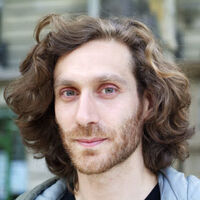
is a writer and contributing editor at France's bestselling Philosophie magazine. The philosophy of Ralph W. Emerson inspired him to develop his own ethics based on anticonformism. He's the author of The Initial Struggle. Leaving Empire of Nihilism (2011) and the upcoming Last Words of the Dying Greats.
Photo : © Hannah Assouline/Opale/Leemage

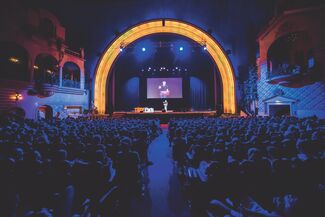
Online TED conferences are massively successful. They showcase thinkers, entrepreneurs, and other entertaining figures with ideas of how to change the world, all neatly packaged in a format combining personal story and stand up comedy. But what about philosophers, who are used to carefully argued debates: can they too be part of the trend?
Let’s start with the numbers. In 2019, TED (“Technology, Entertainment and Design”) conferences had garnered 14 billion views online since they first started in 2002. These are approximately twenty-minute long talks, given on stage, then later posted online, and which thousands of speakers from all corners of the world have given over the years. And they have a catchy slogan to match: “ideas worth spreading” – as simple as that.
In short, “TED talks” are one of the most prominent global phenomena of our time: a quick shot of new and revolutionary ideas, delivered in an entertaining way by scientists, artists, inventors, explorers, business leaders, or politicians – i.e. people with unique life experiences. And in some countries, like France, this format has led to a new school of oratory skill.
‘Each speaker was put through a rigorous training program of no less than seven rehearsals, until their speeches started to sound like a beautiful story’
When, in 2009, the French entrepreneur Michel Lévy-Provençal imported the format to France, he was mostly picturing its “engrossing mix of people who weren’t usually seen in the media: on stage you’d see neuroscientists, robotics experts, or a former child-soldier with a miraculous story of resilience… Our curiosity was enhanced, you’d leave feeling unexpectedly connected with the society in the making.”
But the first two events in Paris, behind closed doors, had a sobering effect: the Americans’ natural sense of showmanship was sorely lacking, and the public looked a little bored. “We realised that we needed to prepare our speakers,” Michel Lévy-Provençal remembers. So each one was put through a rigorous training program of no less than seven rehearsals, in which their speeches were meticulously re-worked with the help of a coach – sharpened, simplified, illustrated – until they started to sound like a beautiful story.
…‘The key part of the TED rhetoric is inference: to systematically start from an example and then draw from it a general idea’
—
Subscribe to Philonomist and gain free access to all our content and archives for 7 days. You'll also receive our weekly newsletter. No commitment. No bank details required.
You're already subscribed to Philonomist via your employer?
Connect to your account by filling in the following details (please provide your professional email address).
