


is a journalist and philosopher of technology with degrees from France’s École Normale Supérieure in Lyon and HEC-Paris, where she specialised in innovation and media, before joining Philonomist’s editorial team.
Picture: © CP
Dear reader,
In the last month, how often have you dared to reply “I don’t know” to your superior or a colleague? Not often, right? Soon you might get overtaken by AI. Recently, a team of researchers at Google tried to make its AI capable of assessing its degree of certainty before answering a question. Basically, they wanted it to be able to say “I don’t know” – and in doing so, imitate our human ability to take a step back from our thoughts. One day, will these AI systems be better at doubting than us?
A year ago, the possibility still felt remote. When it comes to introspection, AI systems have so far been rubbish – and this was where they came under criticism. Perhaps you’ve noticed it yourself: ChatGPT-4 and the likes were noticeably over-confident. And this is hardly surprising when you consider that they were conceived precisely to satisfy us, by producing a text which should seemingly answer all our questions, because it has meaning in connection with our search. To the question “what does a cow eat?” the answer would be “Cows eat fodder” – even if the cow you’re thinking of eats grass. In short, these language programs produce an answer which, according to their calculations, seems the most probable: it’s for us users to assess, correct, or reject it.
It’s true that AI systems often state their limitations and invite us to consult a specialist, namely for legal or medical advice. But until now, technically speaking, and apart from these Google experiments, an AI system couldn’t state outright that it doesn’t know much.
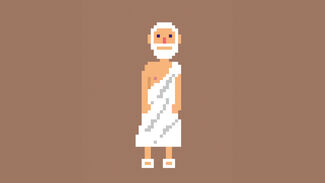
Have we reached a point where, like Socrates who admitted he knew nothing or Descartes who doubted the whole world around him, machines can start to philosophise? Let’s not get carried away. Like often, the actual innovation doesn’t live up to the hype. Google’s program relies on “selective prediction”, which allows it to produce an answer along with a score indicating the probability that it is certain. If the score is under a certain threshold, the machine can then answer: “I don’t know.”
‘The words ‘I don’t know’ isn’t a proof of metacognition – that is to say, the capacity to understand one’s limits in one’s search for the truth’
The degree of “certainty” that these researchers are boasting of corresponds to an indicator measuring the correspondence between a sequence of answers generated by the machine and a corpus of reliable references, produced by men. In short, the words “I don’t know” isn’t a proof of metacognition – that is to say, the capacity to understand one’s limits in one’s search for the truth. It therefore doesn’t concern all the cases outside this corpus.
This type of ignorance, which reflects an uncertainty in relation to a lack of information, comes at a cost. In the face of somewhat technical difficulty, we get stuck for words. Often, there’s not even any shame in admitting it: we do an online search, try to understand what it’s about, and in general, we make even more effort to compensate for our lack of knowledge. Humble, cool, perhaps even endowed with a certain wisdom, people who owns up to their ignorance needn’t blush.
But if it’s so hard to say “I don’t know”, it’s because it points to a different type of ignorance, which is much more dangerous, for it plays a part in romantic breakups, existential crises, strategic reshuffling, etc. Where the machine’s doubt relies on resolving problems, ethical doubt – which is specific to humans – relies on the problematization of reality. Because, unsurprisingly, things seldom happen as expected: we have always absorbed and reinterpreted the world as it presented itself to us. My attempts to represent to myself the details of what will befall me are in vain: “How weak, abstract, diagrammatic they are in contrast to the event that actually happens!” (The Possible and the Real, 1930).
In the face of this torrent of new things, we’re always trying to reassess what we want to do, what we want to avoid, what we find fair or undesirable… What do we really want to do this semester? What do we expect from the project? What do we value in that person who is asking us for a raise? We should treat those who are terrified of not knowing with understanding. Because what can be more difficult than admitting that we don’t just not know; we don’t even know where we’re going?
Apolline Guillot
Picture © cako74 / iStockphoto
