


is the chief editor of Philonomist. After studying at France's ESSEC business school and graduating in philosophy from the École Normale Supérieure (ENS), she joined Philo Éditions (the editor of Philosophie Magazine) in 2010. A year later she oversaw the launch of the German version of the publication, Philosophie Magazin, for which she served as the editorial supervisor. Anne-Sophie is now in charge of Philonomist, the online media specially created by Philosophie Magazine for the world of business and economics.
Picture: © Serge Picard

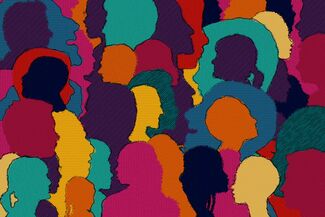
We tend to associate diversity with some crude obligation to meet quotas. But if we view it from a qualitative rather than quantitative angle, we start to discover its true potential in the workplace... And this is where Henri Bergson’s philosophy can come in handy.
Créateur de sondage - alimenté par Riddle
“Diversity”: just saying the word can be enough to make colleagues yawn or roll their eyes, as they’re reminded of some preachy lecture detailing every demographic underrepresented within the workforce. We tell ourselves we’ll do more to open up the recruitment process, that we’ll keep an eye on the company statistics, that we’ll apply sophisticated quotas... before suddenly remembering that in France, it’s illegal to carry out ethnic surveys or ask about a candidate’s disability. So we feel deflated, convinced that it’s vain to try to ensure that all of society is represented within our small team of employees.
The end result of all this is that diversity often remains stuck at the stage of wishful thinking, good intentions. We lecture our colleagues on tolerance, knowing it won’t make any difference. Why do we struggle to extricate diversity from the realm of lofty sermons? Why don’t we move beyond declarations of principle, and gladly welcome new profiles among our ranks?
Perhaps because we tend to see diversity in a quantitative light. Type “diversity” in Google: you’ll find pictures of silhouettes representing various cultures and skin colours, from Sikhs to people in wheelchairs to veiled women, perhaps a picture of intermingled hands of different colour, like reality show participants swearing loyalty to their team before going on to stab each other in the back.
A tale of two multiplicities
If there’s one philosopher who would certainly have raised an eyebrow at our current conception of diversity, it’s Henri Bergson. As a critic of our tendency to break down reality and force it into air-tight categories, he would probably have mocked our desire to create diversity by assembling individuals like pieces of cloth in a patchwork.
‘Qualitative multiplicity unfolds with duration: it involves elements which morph into each other to the extent that they can no longer be distinguished’
Bergson distinguished two multiplicities. The first, quantitative and number-based, consists of the juxtaposition of units in space. This is the one we get when we count numbers (or individuals). The other, qualitative, unfolds with duration: it involves elements which morph into each other to the extent that they can no longer be
…Subscribe to Philonomist and gain free access to all our content and archives for 7 days. You'll also receive our weekly newsletter. No commitment. No bank details required.
You're already subscribed to Philonomist via your employer?
Connect to your account by filling in the following details (please provide your professional email address).
